Throughout Naples' saline humidity and elevated UV, you require a licensed and insured professional who maintains windows quarterly, cleans gutters semiannually, and applies precisely adjusted pressure or soft washing to stop corrosion, biofilm, and water intrusion. Anticipate ANSI-rated safety, runoff control, SDS-compliant chemical handling, and line-item scopes with PSI/nozzle details. They will protect landscaping, clear downspouts, reseal miters, and verify drainage. Obtain copyright-sent COIs and maintenance plans with set rates and reminders. Learn how to determine the right schedule and methods next.
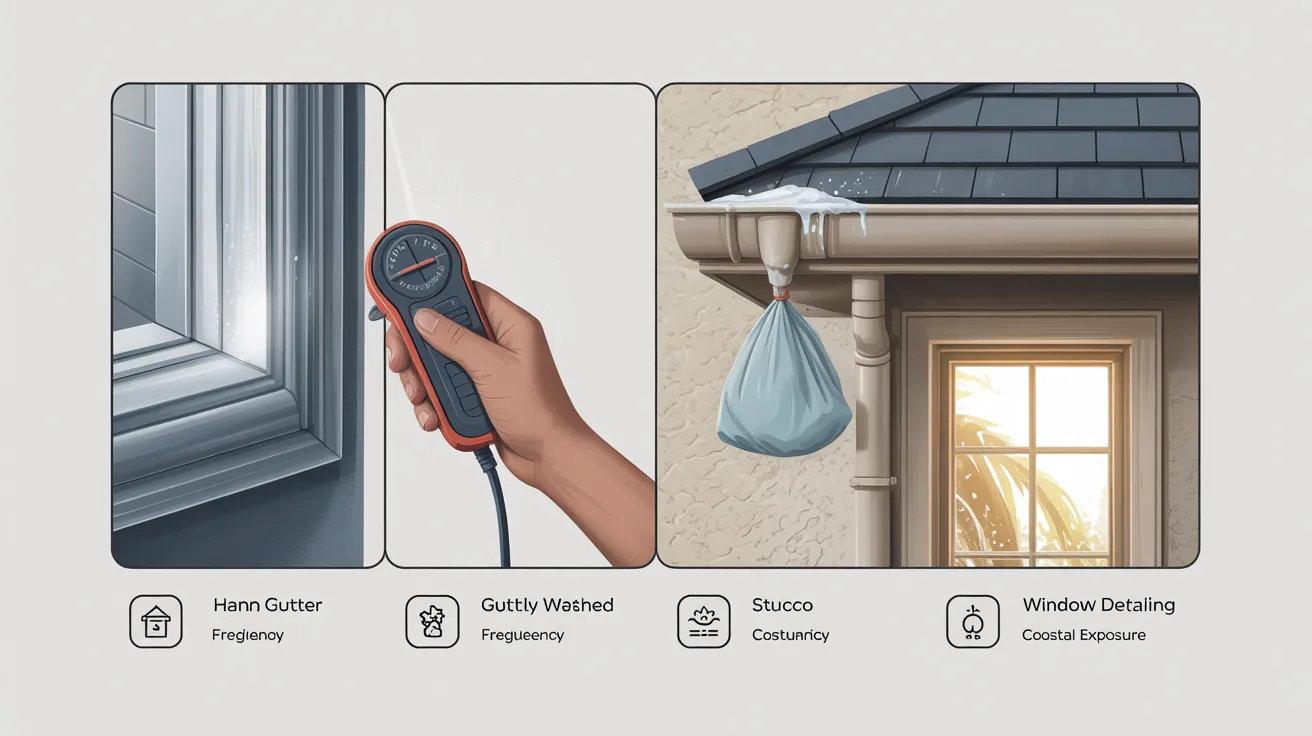
Essential Highlights
- Naples' seaside climate calls for quarterly window cleaning and semi-annual pressure/soft washing to get rid of salt, UV oxidation, and algae.
- Plan gutter cleaning twice yearly, with post-storm checks; ensure downspouts discharge five feet from the foundation.
- Utilize soft washing for roofing, siding, and stucco; reserve pressure washing for concrete and pavers with adjusted PSI to prevent damage.
- Count on safety-centered service: PPE, ladder stabilization, fall protection, runoff containment, and OSHA-compliant chemical handling.
- Validate insurance: request certificates delivered from the copyright listing your property, with active general liability and workers' compensation.
How Naples' Weather Impacts Your Windows, Gutters, and Exterior Surfaces
Generally, Naples' moisture-rich coastal climate speeds up wear on windows, gutters, and exterior surfaces. You face constant salt spray that deposits chlorides on glass, frames, and metal fasteners, increasing corrosion and etching. Significant humidity drives moisture into joints, seals, and soffits, promoting mold development, biofilm, and paint failure. UV exposure degrades sealants and oxidizes vinyl and painted finishes, while wind-driven rain forces particulates into weep holes and gutter seams.
For windows, mineral deposits and pitting diminish clarity and degrade low-e coatings. For gutters, saline buildup and organic waste hasten rust, seam leaks, and downspout clogs. For siding, stucco, and pavers, humidity and salts encourage algae, mildew, and efflorescence. You minimize risk by overseeing drainage, keeping intact sealants, and planning surface-safe, routine rinsing.
Benefits of Professional Cleaning compared to DIY Techniques
Although DIY cleaning appears cost-effective, professional service delivers measurable benefits in safety, longevity, and results. You avoid ladder risks, electrical hazards, and chemical exposure. Trained technicians evaluate substrate type, set proper pressures, and select eco friendly solvents that remove biofilm without harming glass, lifting paint, or killing landscape. They calibrate flow, temperature, and dwell times to protect stucco, screens, and gutter seals.
You further profit from systematic equipment maintenance. Commercial pumps, hoses, and filtration produce stable PSI/GPM and spot-free rinses; routine calibration stops surging that forces water under siding or shingles. Pros log material conditions, identify failing seals and fasteners early, and increase asset life. DIY often under-rinses, scratches surfaces, and voids warranties. With professionals, you gain predictable outcomes, reduced rework, and verified compliance with local discharge requirements.
Glass Washing: Approach, Protection, and Flawless Finish
You'll execute a specific workflow: inspect glass and frames, pre-rinse, apply solution, agitate with a scrubber, squeegee with overlapping strokes, detail edges, and final-check in cross light. You'll employ proper safety gear-gloves, eye protection, non-slip footwear, and fall protection-and follow ladder and lift protocols per OSHA. You'll eliminate streaks by regulating sun exposure, maintaining tools clean, switching out solution regularly, and finishing with lint-free detailing.
Systematic Cleansing Process
Start with a structured plan to clean windows efficiently, safely, and without streaks. Stage tools, verify water purity, and map a logical sequence: top-to-bottom, interior-to-exterior, then detail work. Pre-dust frames and tracks to prevent slurry. Wet the glass with a detergent solution, ensuring even coverage and controlled dwell.
Clean corners and edges first, then field the pane with methodical passes. Use equipment rotation: allocate particular squeegees, pads, and buckets to zones to stop cross-contamination and keep sharp rubber. Drag the squeegee in overlapping strokes, maintain the leading edge dry, and dry the blade after each pass.
Conclude with accurate drying techniques: work on edges employing a clean microfiber, handle corners with a fine detailing towel, and examine under angled light for leftover haze.
Safety Equipment and Protocol Standards
Once the workflow is established, protect yourself and the jobsite with dedicated safety gear and clear protocols. Commence with head-to-toe PPE: ANSI-rated eye protection, cut-resistant gloves, non-slip footwear, and long sleeves. Check respirator fitment for particulate or vapor cartridges when handling acids or mixing cleaning solutions. Examine ladders, stabilize base, and tie off at height with a certified fall arrest system—harness, lanyard, and anchored lifeline.
Regulate chemical handling: label containers, follow SDS, mix in ventilated areas, and use dedicated measuring tools to avoid cross-contamination. Control overspray and runoff; plug exterior outlets and cover landscaping. Create drop zones under work areas and secure tools with lanyards. Tailboard briefings before job start, lockout of pressure systems during maintenance, and post-job inspections finalize safety.
Gutter Maintenance: Preventing Water Damage and Maintaining Flow
Following heavy rains and seasonal leaf drop, obstructed gutters create a direct path to foundation erosion, fascia rot, and water leaks inside. You prevent that by restoring clear flow from eaves to downspouts. Begin with a roofline inspection: identify accumulated debris, loose hangers, seam failures, and wildlife nests that reduce drainage capability. Eliminate organic buildup, rinse the channels, and ensure downspout discharge at least five feet from the foundation.
Install leaf guards dimensioned to area rainfall intensity; confirm they don't impede overflow at valleys. Reseal miters with elastomeric sealant, reconfigure sections to reach 0.25 inches per ten feet, and anchor loose spikes with hidden hangers. Evaluate with a controlled water run to detect leaks and backflow. Schedule semiannual service to correspond to Naples' storm cycles.
Pressure Washing and Soft Washing: Selecting the Right Method for Each Surface
Gutter cleaning reestablishes effective drainage; now match your cleaning method to each exterior surface to stop damage. Employ pressure washing for tough, long-lasting materials-concrete, pavers, and some masonry-where elevated PSI and rotary nozzles lift embedded grime. Verify surface compatibility first; aged mortar, soft brick, and limestone can etch. For siding, stucco, painted wood, and roofing, opt for soft washing: gentle-pressure treatment with adjusted detergents that kill organic growth without abrasion.
Adjust PSI/GPM according to substrate strength and soil load. Optimize chemical selection by combining surfactants with sodium hypochlorite for biofilm, or degreasers for petroleum residues; always follow dwell times and rinse thoroughly. Protect landscaping with pre-wet and post-rinse. Use wide fan tips, ensure standoff distance consistent, and test hidden areas before full application.
Suggested Cleaning Frequencies for Naples Homes
In the coastal climate of Naples, humidity, salt spray, and organic buildup hasten the soiling process, so you must maintain tighter cleaning intervals. You should plan a seasonal maintenance schedule that aligns with summer storms and winter dry periods to control buildup and protect finishes. Define baseline frequencies—windows quarterly, gutters semiannually (with post-storm checks), and pressure/soft washing biannually—then adjust based on exposure and material.
Effects of Coastal Climate
Though Naples receives ample sun, its coastal climate hastens exterior wear, so cleaning schedules should be more frequent than inland norms. You face constant salt spray that deposits chlorides on glass, frames, stucco, metals, and pavers. These hygroscopic salts attract moisture, drive corrosion, pit coatings, and etch glazing. Airborne debris-sand, palm fibers, and organic litter-abrades surfaces, clogs gutters, and traps moisture against fascias, encouraging rot and biofilm growth.
To mitigate, reduce timeframes based on site exposure conditions. Oceanfront or bayside lots require higher-frequency window washing to remove chloride films before etching commences. Gutters surrounding canopy trees demand more frequent clearing to maintain design flow and prevent soffit seepage. Pressure washing should target slip-prone areas where aerosolized salts and fines accumulate, using measured PSI and appropriate detergents to safeguard substrates.
Seasonal Upkeep Care Schedule
Generally, Naples' coastal exposure requires a tighter, season-aware schedule for exterior care. In spring, organize window cleansing and screen cleaning, initiate mildew control on stucco and soffits, and assess gutters before rains. Adjust irrigation adjustments to limit overspray onto glass and siding.
Summer requires monthly rinsing of salt film from windows and railings, mid-season gutter checks, and roof moss inspection after storms. Perform plant pruning to expose facades and eliminate abrasive contact.
In autumn, carry out complete pressure washing, clear downspouts, and log minor sealant issues. Begin holiday preparations by checking exterior lighting circuits and safe attachment points.
Winter months are ideal for detailed glass polishing, roof moss spot-treatments, and equipment storage: drain hoses, service pumps, and label chemicals. Perform quarterly inspections to maintain standards.
What You Should Look for in a Local, Licensed, and Insured Provider
Carry out insurance verification by requesting certificates sent directly from the copyright. Require general liability and workers' compensation; check limits, effective dates, and that your property is listed as certificate holder. Question regarding safety training, OSHA-compliant practices, and chemical handling for soft wash versus pressure wash.
Assess equipment condition, ladder and lift protocols, and written SOPs. Check warranties, workmanship guarantees, and complaint resolution history.
Pricing, Scheduling, and Seasonal Maintenance Tips
While prices change according to residence size and grime level, anticipate transparent, line-item pricing that separates window, gutter, and power and soft washing with square-foot or per-opening metrics, travel fees, and add-ons (screen work, oxidation removal, roof wash). You'll appreciate pricing transparency: request a written scope, chemical list, tip/PSI details, and estimated hours. Seek tiered packages and bundle discounts to reduce mobilization costs.
Make scheduling flexibility. Schedule online with time ranges, automated reminders, and weather contingencies. In Naples, schedule window cleaning every quarter, gutters twice yearly (following summer storms and late fall), and exterior cleaning every six months; add a spring pollen rinse if vegetation is heavy. After major storms, schedule inspections within 72 hours to prevent staining or biological growth. Secure maintenance plans with locked rates and priority rescheduling.
FAQ
Are You Offering Environmentally Friendly Detergents That Are Safe for Pets and Landscaping?
Yes. You can choose biodegradable formulas and pet safe solutions for all cleaning tasks. We utilize surfactants with quick aquatic biodegradation, low VOC content, and neutral pH to protect hardscapes, turf, and ornamentals. We provide precise dilution ratios, controlled dwell times, and low-pressure rinsing to limit runoff. We also apply containment and post-rinse neutralization when needed. You approve products in advance, and we supply SDS documentation for every detergent utilized.
Is It Possible to Have Solar Panels and Screen Enclosures Cleaned at the Same Time?
Solar panels and screen enclosures can be cleaned together in one appointment. Like tuning an orchestra, we organize solar panel washing with deionized water at low pressure to safeguard coatings, and wash frames to clear away biofilm. For enclosures, we gently clean screens, clean out tracks, and check fasteners. We include an enclosure repair assessment, recording torn mesh, loose spline, or corroded hardware. You'll receive a detailed report, photos, and clear recommendations, cutting down on downtime and return trips.
Are There Maintenance Plans That Include Bundled Multi-Service Discounts?
Yes. You can sign up for tiered maintenance plans that bundle services for multi-service savings. We apply loyalty discounts automatically and guarantee preferred pricing for the term. Plans include scheduled inspections, prioritized booking, and documented service reports. You select frequency—monthly, quarterly, or semiannualbased on load, exposure, and manufacturer guidelines. We adapt scope according to site conditions, consolidate visits to reduce travel charges, and provide a single invoice with transparent line-item costs and measurable performance metrics.
How Do You Manage Hard-Water Staining From Reclaimed Irrigation Systems?
Struggling with reclaimed irrigation stains? You implement a targeted procedure: locate mineral buildup, test get more info pH, then apply an acid-based chelant (frequently oxalic or phosphoric) to dissolve deposits without causing surface etching. You agitate with non-marring pads, control dwell time, and neutralize to stabilize the substrate. Cleanse with deionized water to inhibit spotting. For sensitive glass or coated surfaces, you use softer formulations and spot-test. In conclusion, you seal to minimize future accumulation.
Do You Provide Before-And-After Photos and Service Documentation?
Yes. You get time-stamped pre-and-post-service photos for every service area, plus a digital report outlining methods, detergents, PSI/flow rates, and safety measures. We include site notes, surface condition observations, and maintenance recommendations. For accountability, we log personnel, duration, and materials as proof of completion. You can access everything via a secure link. We also share curated customer testimonials relevant to your service scope to demonstrate performance and outcomes.
Summary
You've observed how Naples' salt air, humidity, and storms punish windows, gutters, and exteriors. Work with licensed, insured specialists to prevent etching, clogs, and mildew while protecting finishes. For example, a Park Shore home with oxidized stucco and overflowing gutters changed to quarterly window cleaning, biannual gutter service, and annual soft washing-reducing water intrusion repairs to zero and improving curb appeal. Schedule ahead of rainy season, check methods and detergents, and pick providers with documented safety, clear pricing, and guarantees.